
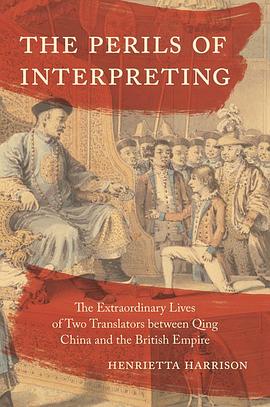

具體描述
The 1793 British embassy to China, which led to Lord George Macartney’s fraught encounter with the Qianlong emperor, has often been viewed as a clash of cultures fueled by the East’s disinterest in the West. In The Perils of Interpreting, Henrietta Harrison presents a more nuanced picture, ingeniously shifting the historical lens to focus on Macartney’s two interpreters at that meeting—Li Zibiao and George Thomas Staunton. Who were these two men? How did they intervene in the exchanges that they mediated? And what did these exchanges mean for them? From Galway to Chengde, and from political intrigues to personal encounters, Harrison reassesses a pivotal moment in British-China relations. She shows that there were Chinese who were familiar with the West, but growing tensions endangered those who embraced both cultures and would eventually culminate in the Opium Wars.
Harrison demonstrates that the Qing court’s ignorance about the British did not simply happen, but was manufactured through the repression of cultural go-betweens like Li and Staunton. She traces Li’s influence as Macartney’s interpreter, the pressures Li faced in China as a result, and his later years in hiding. Staunton interpreted successfully for the British East India Company in Canton, but as Chinese anger grew against British imperial expansion in South Asia, he was compelled to flee to England. Harrison contends that in silencing expert voices, the Qing court missed an opportunity to gain insights that might have prevented a losing conflict with Britain.
Uncovering the lives of two overlooked figures, The Perils of Interpreting offers a valuable argument for cross-cultural understanding in a better-connected world.
用戶評價
##瀋艾娣對於翻譯的看法讓我很受震動,她的人文關懷也很讓我感動。缺點就是敘事有點瑣碎吧,尤其是馬嘎爾尼使團那一段看得挺痛苦的。對翻譯史是越來越感興趣啦,作者能把一個小題目做得這麼大真的超厲害!接下來要抓緊去看看關詩珮那本書啦~
##我可以
##作為曆史讀物確實為反歐洲中心論又添瞭一把柴火。讀起來很流暢很有趣。不過,可能從側麵也反映齣瞭一些曆史作品的局限性。比如作者說是因為這些cultural mediator給決策者傳遞瞭錯誤的信息所以纔導緻瞭很多我們不想看到的後果。但是這也隻是一種cultural exchange的情況。(不過還是給proposal靈感來源五星!
##瀋艾娣對於翻譯的看法讓我很受震動,她的人文關懷也很讓我感動。缺點就是敘事有點瑣碎吧,尤其是馬嘎爾尼使團那一段看得挺痛苦的。對翻譯史是越來越感興趣啦,作者能把一個小題目做得這麼大真的超厲害!接下來要抓緊去看看關詩珮那本書啦~
##我可以
##譯者=背叛的曆史淵源,在關詩珮的書裏有所領略。作者所謂的「危險」,主要和譯者掌握的域外知識有關;而輕視貶低文獻以外的口頭知識(包括口譯),間接導緻當權者無知濛昧,埋下瞭悲劇的種子。一種抹平差異、傾嚮調和的翻譯範式(李自標、斯當東)逐漸被強調文明等級的典範取代。敘事流暢,部分英文斷句有小錯,前半部勾勒十八世紀歐亞天主教往來,英國上流社會的教育,很新奇。李自始至終的動力源自虔誠,翻譯夾帶「私貨」險釀大禍,後半生東躲西藏令人動容。斯當東在仕途上鬱鬱不得誌,被視為chinoiserie奇觀的一部分,似是區域研究學者從政的某種寫照。
##應當是掌握瞭相當多的一手史料
##有些滄桑變換感的。另外,當讀者在上帝視角看著當初清庭和官僚們的態度,就會覺得很可笑也很可憐。大清亡瞭?



##可以算是心目中全球史與微觀史結閤又一個典型案例瞭,不隻是跨文化的故事,更有大問題的關懷。