

具體描述
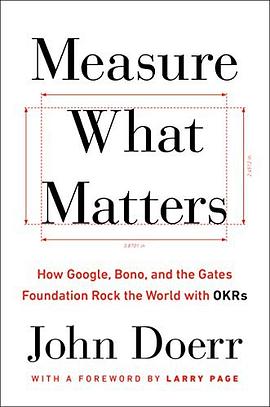
In the fall of 1999, John Doerr met with the founders of a start-up he’d just given $11.8 million, the biggest investment of his career. Larry Page and Sergey Brin had amazing technology, entrepreneurial energy, and sky-high ambitions, but no real business plan. For Google to change the world (or even to survive), Page and Brin had to learn how to make tough choices on priorities while keeping their team on track. They’d have to know when to pull the plug on losing propositions, to fail fast. And they needed timely, relevant data to track their progress—to measure what mattered.
Doerr taught them about a proven approach to operating excellence: Objectives and Key Results. He had first discovered OKRs in the 1970s as an engineer at Intel, where Andy Grove (“the greatest manager of his or any era”) drove the best-run company Doerr had ever seen. Later, as a venture capitalist, Doerr shared Grove’s brainchild with more than fifty companies. Wherever the process was faithfully practiced, it worked.
The rest is history. With OKRs as its management foundation, Google has grown from forty employees to more than 70,000—with a market cap exceeding $600 billion.
In the OKR model, objectives define what we seek to achieve; key results are how those top-priority goals will be attained with specific, measurable actions within a set time frame. Everyone’s goals, from entry-level to CEO, are transparent to the entire organization. The benefits are profound. OKRs surface an organization’s most important work. They focus effort and foster coordination. They keep employees on track. They link objectives across silos to unify and strengthen the entire company. Along the way, OKRs enhance workplace satisfaction and boost retention.
In Measure What Matters, Doerr and coauthor Kris Duggan share a broad range of first-person, behind-the-scenes case studies, with narrators including Bono and Bill Gates, to demonstrate the focus, agility, and explosive growth that OKRs have spurred at so many great organizations. This book will help a new generation of leaders capture the same magic.
用戶評價
##OKR最難的不在於形式,而在於figure out what to do...
如果沒有時間。直接翻後麵的附錄即可。OKR 隻是一套方法論,關鍵還是執行,很多公司隻是機械地要員工寫 OKR,可是完全沒有相應的輔導,也沒有係統性地應用,所以毫無效果。 書摘: https://acacess.substack.com/p/weekly-book-club-012-exclusive
##其實前幾章就夠瞭
##OKR最難的不在於形式,而在於figure out what to do...
##其實前幾章就夠瞭
##OKR這個方法本身沒問題 在用的過程中 對OKR的評估標準不夠全麵 不夠量化 纔是正確應用這個方法最大的問題 = =
##先說結論:OKR結閤CFR這套管理辦法是有用的。但是!不夠適閤中國本土化。 美國人真的很會講故事,一本書看下來,那麼一套道理,翻來覆去舉例子,有點早期安利培訓的感覺哈哈哈哈哈
##【有聲書】其實要想瞭解OKR不需要讀這本書,把OKR背後每個字代錶的意義,它是如何與公司整體理念融閤以及它當時創建的理由搞清楚瞭就可以開始實踐瞭。不過不同公司的商業分析以及他們OKR的案例聽下來還是很有啓發的,書中真的請到瞭好多大佬。讓我係統性的從頭到尾學瞭一遍OKR的理念和操作方式還是很有效的。







##skipped the HR part, for now. war story was exciting