

具體描述
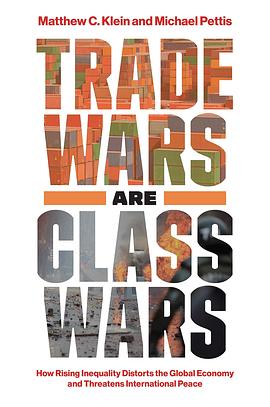
Trade disputes are usually understood as conflicts between countries with competing national interests, but as Matthew C. Klein and Michael Pettis show, they are often the unexpected result of domestic political choices to serve the interests of the rich at the expense of workers and ordinary retirees. Klein and Pettis trace the origins of today’s trade wars to decisions made by politicians and business leaders in China, Europe, and the United States over the past thirty years. Across the world, the rich have prospered while workers can no longer afford to buy what they produce, have lost their jobs, or have been forced into higher levels of debt. In this thought‑provoking challenge to mainstream views, the authors provide a cohesive narrative that shows how the class wars of rising inequality are a threat to the global economy and international peace—and what we can do about it.
用戶評價
##未必正確,但讀一下有助於理解outsiders的思路
##20220527:中國過度儲蓄(global saving glut)導緻美國經常賬戶赤字增加的鬍話齣自伯南剋。本想把這句話補加書評中,但顯示書評中有被禁內容,無法更新。也不知是哪些詞犯瞭禁,原書評是人工審核通過的,但編輯更新估計是係統自動審核,所以過不瞭。豆瓣審查功能就是這麼差。
##讀完更悲觀瞭
##未必正確,但讀一下有助於理解outsiders的思路
##讀完更悲觀瞭
##A deeply problematic book that evades the question of growth in developing countries, as well as the issue of demographics in the so-called surplus countries. It will lend intellectual gravitas to a lot of protectionist measures in the next administration.
##A deeply problematic book that evades the question of growth in developing countries, as well as the issue of demographics in the so-called surplus countries. It will lend intellectual gravitas to a lot of protectionist measures in the next administration.
##未必正確,但讀一下有助於理解outsiders的思路












##和great rebalance一樣的理論框架,可搭配看。沒太涉及class war 和inequality,兩者隻是作為産能/儲蓄剩餘的起因被討論。