
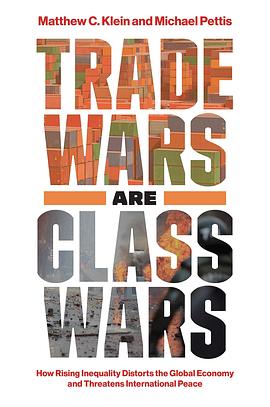

具体描述
Trade disputes are usually understood as conflicts between countries with competing national interests, but as Matthew C. Klein and Michael Pettis show, they are often the unexpected result of domestic political choices to serve the interests of the rich at the expense of workers and ordinary retirees. Klein and Pettis trace the origins of today’s trade wars to decisions made by politicians and business leaders in China, Europe, and the United States over the past thirty years. Across the world, the rich have prospered while workers can no longer afford to buy what they produce, have lost their jobs, or have been forced into higher levels of debt. In this thought‑provoking challenge to mainstream views, the authors provide a cohesive narrative that shows how the class wars of rising inequality are a threat to the global economy and international peace—and what we can do about it.
用户评价
##台版繁体,记忆点:第二章1820年开始的全球金融周期/危机梳理不错(逐利阶层的全球化运作,以及地方代表,势必表现以及勾稽政治和军事力量);重述霍布森观点,从贸易顺逆差追究到分配制度(世界大同可行性不高);以及简述全球贸易历史(盛极一时的避税安排以及国际贸易高融合下的全貌难解)
##"Despite these moves toward liberalization, the end of the war failed to restore trade to its pre-1929, much less pre-1913, importance. In fact, crossborder flows of goods and services relative to global output would not return to the zenith reached in the 1870s until the 1970s." Shocked me.
##台版繁体,记忆点:第二章1820年开始的全球金融周期/危机梳理不错(逐利阶层的全球化运作,以及地方代表,势必表现以及勾稽政治和军事力量);重述霍布森观点,从贸易顺逆差追究到分配制度(世界大同可行性不高);以及简述全球贸易历史(盛极一时的避税安排以及国际贸易高融合下的全貌难解)
为时而著,但不妨碍是一本好书。前三章温习了国际贸易、国际金融和发展经济学最重要的知识点。后三章阐述了中德美在当今世界贸易中的现状。中德因为自身的历史和结构性原因制造有余而消费不足,超额供给在全世界寻求市场;美国因美元的霸权地位吸收全世界的冗余资金,随之而来的巨额私人债务和贸易逆差加剧了锈带的去工业化,最终让右翼民粹主义登台。循此逻辑,Klein和Pettis不同意Navarro的双边贸易解决方案,而是要求以各国的国内调整带动国际间的调整,避免重演一百年前国际贸易不平衡的覆辙。作者用心不可谓不良苦,但最优逻辑解的条件往往又是最苛刻的。由最优解向次优解、次次优解一路滑落,最终积重难返,这样的例子在历史上也比比皆是。
##未必正确,但读一下有助于理解outsiders的思路
##对中美的了解都加深了一点
##普选制的特点就是不管贫富悬殊是人都有一票,所以哪怕全球资本已经是让一批美国人先富起来了,还是要转过身哄好这批被时代抛弃的同胞,反正是那帮民主党人、邪恶帝国在搞火。美式愚民,哑然失笑。
##论述起来显得不太convincing,很容易被低估,但说出了很多ugly truth,有助于理解当下,实在比很多所谓“严肃的学术著作”强多了。读完想借用Michael Yates的书名叹一句,Can the Working Class(Still) Change the World?







##历史蛮详实的,国际贸易入门书