

Conventions
Chinese Dynasties and Periods
Map of China
Introduction
1. The Palace Workshops: The Emperor and His Servants
2. Yellow Hill Villages: The Stonecutters
3. Suzhou: The Crafts(wo)man
4. Beyond Suzhou: Gu Erniang the Super-Brand
5. Fuzhou: The Collectors
Epilogue: The Craft of Wen
Appendix 1: Inkstones Made by Gu Erniang Mentioned in Textual Sources Contemporary to Gu
Appendix 2: Inkstones Bearing Signature Marks of Gu Erniang in Major Museum Collections
Appendix 3: Members of the Fuzhou Circle
Appendix 4: Textual History of Lin Fuyun's Inkstone Chronicle (Yanshi)
Appendix 5: Chinese Texts
Notes
Glossary of Chinese Characters
References
Index
· · · · · · (收起)
具体描述
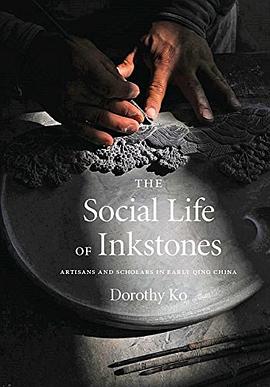
An inkstone, a piece of polished stone no bigger than an outstretched hand, is an instrument for grinding ink, a collectible object of art, a token of exchange between friends or sovereign states, and an inscriptional surface on which texts and images are carved and reproduced. As such the inkstone is entangled with the production of elite masculinity and the culture of wen (culture, literature, civility) in China, Korea, and Japan for over a millennium. Curiously, this ubiquitous object in East Asia is virtually unknown in Europe and America.
The Social Life of Inkstones introduces its hidden history and cultural significance to scholars and collectors and in so doing, writes the stonecutters and artisans into history. Each of the five chapters is set in a specific place in disparate parts of the empire: the imperial workshops in the Forbidden City, the Duan quarries in Guangdong, inkstonecarving workshops in Suzhou and elsewhere in the south, and collectors’ homes in Fujian. Taken together, they trace the trajectories of the inkstone between court and society, and through the course of its entire social life. In bringing to life the people involved in making, using, collecting, and writing about the inkstone, this study shows the powerful emotional and technical investments that such a small object engendered.
This first book-length study of inkstones focuses on a group of inkstone carvers and collectors, highlighting the work of Gu Erniang, a woman transitioned the artistry of inkstone-making to modernity between the 1680s and 1730s. The sophistication of these artisans and the craft practice of the scholars associated with them announced a new social order in which the age-old hierarchy of head over hand no longer predominated.
用户评价
##中文版怎么能这么贵!
中文譯本埋頭苦幹中,並將由原作者高彥頤親自操刀修訂,敬請期待!
##中文版怎么能这么贵!
##craft of wen, materiality of body. 在反思一点,对形式分析的利用可以导向风格序列的建立(方闻)、可以揭示“愉悦感”的建构方式(乔迅)、或是展现宗教思想与实践的转向(金珍我)。但在作者这里,对形式的描述与感官的唤起缺乏更为明确的锚点:个人很喜欢她对刘源造砚的分析,很好地展现出清初宫廷对机巧的崇尚,但在顾二娘相关的分析中,由于现存材料极度稀薄,精细的分析也只能沦作散兵游勇。作者似乎想要通过对砚台的仔细观察与描述来展现出这一时期人们对物质性及技艺的关注,进而试图为艾尔曼的“理学到朴学”演进找到更早的潜流。然而,小小的砚台是否能直接承受如此之重的转向——如何弥合感官与思想间的鸿沟,对古代身体经验的当代重构是否也成为了一种霸权?观察与体验很重要,但这仅仅是第一步。
##松花石 vs 端石
##中文版怎么能这么贵!
##一些撕标签的过程,梳理社会肌理。
##我认为此书最引人入胜之处是作者提出的"craft of wen" 这个概念。它是指一种episteme将theories, writings阐释为practices. 也就是说,"craft of wen"成为一种总体知识的观念,其中包容了各种知识的形式。而这个episteme十分powerful的一点是它不仅具有power的implication,同时还实现了作者对dualism以及对不同知识之间的hierarchical结构的解构。作者在最后十分大胆的设想,将这样episteme的形式和十八世纪后半叶的艾尔曼所说的“从理学到朴学”的考据学转型的联系的可能性假设性地提出而作为此书向未来的指示。这样的问题,似乎还是需要更厚实的研究和视角,一个砚台毕竟还是有其局限。






##希望快出中文版