

具體描述
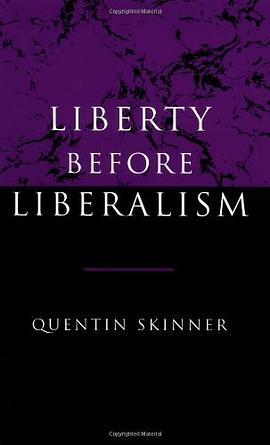
This extended essay by one of the world's leading historians seeks, in its first part, to excavate, and to vindicate, the neo-Roman theory of free citizens and free states as it developed in early-modern Britain. This analysis leads on to a powerful defence of the nature, purposes and goals of intellectual history and the history of ideas. As Quentin Skinner says, 'the intellectual historian can help us to appreciate how far the values embodied in our present way of life, and our present ways of thinking about those values, reflect a series of choices made at different times between different possible worlds'. This essay thus provides one of the most substantial statements yet made about the importance, relevance and potential excitement of this form of historical enquiry. Liberty before Liberalism is based on Quentin Skinner's Inaugural Lecture as Regius Professor of Modern History in the University of Cambridge, delivered in November 1997. Professor Skinner has been awarded the Balzan Prize Life Time Achievement Award for Political Thought, History and Theory. Full details of this award can be found at http://www.balzan.it/News_eng.aspx?ID=2474
用戶評價
##和Berlin一起讀就是劍橋vs牛津
##What remains under-explored is the positive account of nature underlying the neo-Roman conception of freedom, along with the republican strand of classical liberalism (e.g. Mill, Tocqueville) which treats civic virtue as the sinew of a health body politic.
##和Berlin一起讀就是劍橋vs牛津
##Skinner從不讓人失望
##Skinner真是好讀得有點過分瞭,一個學者能把學術講得這麼清楚明白本身就是一大功力。雖然Skinner批判我喜愛的Berlin老頭子,但確實批判的在理啊。最後一章講曆史學的意義,to prevent bewitchment, to liberate us from the grip of any hegemonal account of values, 醍醐灌頂。
##和Berlin一起讀就是劍橋vs牛津
##慚愧錶示這是我第一本從頭讀到尾的英文書,內容本身不難,但總覺得和波考剋的說法有點微妙不同。
##Skinner從不讓人失望








##為什麼寫英文的不能都像斯金納這樣寫大白話?