
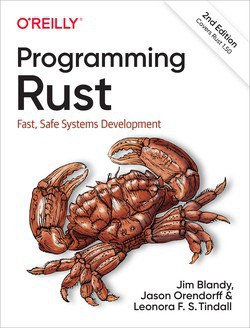

具体描述
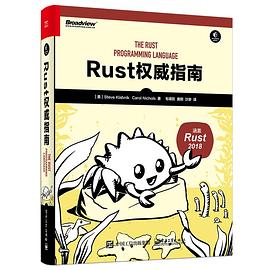
The Rust programming language offers the rare and valuable combination of statically verified memory safety and low-level control. Imagine C++ but without dangling pointers, null pointer dereferences, leaks, or buffer overruns. With this practical guide, systems programmers will understand Rust’s rules clearly and economically. You’ll learn how to express programs that Rust can prove are free of a broad class of common errors.
Rust brings the benefits of an expressive modern type system to systems programming. Authors Jim Blandy and Jason Orendorff demonstrate how Rust’s features put programmers in control over memory consumption and processor use, combining predictable performance with memory safety and trustworthy concurrency.
You’ll learn:
How to write fast, safe, concurrent programs in Rust
Rust’s rules for managing memory efficiently, including ownership, borrowing, moves, and lifetimes
How to design interfaces that fit well into the Rust ecosystem
Rust’s all-purpose Cargo tool for building, testing, and managing Rust packages
High-level features like traits, generics, closures, and iterators that make Rust productive and flexible
用户评价
##这本书十年前读的,挺不错的~哦,忘了我现在穿越到了2020年了,,,对了,这本书会跳票,要2022年才正式出版。
##应该早点看这本
##读完官方那本之后,推荐读一下这本。好多概念看完这本后能加深理解,醍醐灌顶。本书配图非常棒,所有权、内存布局等概念,一图胜千言
与the book 相比,内容的叙事方式不同,结合the book, reference一起看
##读完官方那本之后,推荐读一下这本。好多概念看完这本后能加深理解,醍醐灌顶。本书配图非常棒,所有权、内存布局等概念,一图胜千言
##比官方的 The Rust Programming Language 要深入很多,让你真正上手 Rust!
##这本书十年前读的,挺不错的~哦,忘了我现在穿越到了2020年了,,,对了,这本书会跳票,要2022年才正式出版。
##更细致一些,颇有 programming in scala 书写的感觉。尤 asynchronous 这章,循循善诱。






##入门推荐