

具體描述
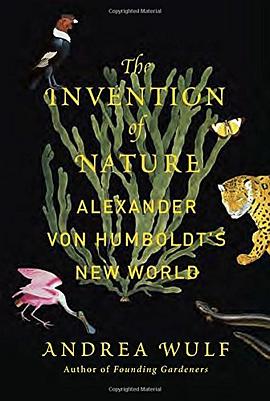
The acclaimed author of Founding Gardeners reveals the forgotten life of Alexander von Humboldt, the visionary German naturalist whose ideas changed the way we see the natural world—and in the process created modern environmentalism.
Alexander von Humboldt (1769–1859) was an intrepid explorer and the most famous scientist of his age. In North America, his name still graces four counties, thirteen towns, a river, parks, bays, lakes, and mountains. His restless life was packed with adventure and discovery, whether he was climbing the highest volcanoes in the world or racing through anthrax-infected Siberia or translating his research into bestselling publications that changed science and thinking. Among Humboldt’s most revolutionary ideas was a radical vision of nature, that it is a complex and interconnected global force that does not exist for the use of humankind alone.
Now Andrea Wulf brings the man and his achievements back into focus: his daring expeditions and investigation of wild environments around the world and his discoveries of similarities between climate and vegetation zones on different continents. She also discusses his prediction of human-induced climate change, his remarkable ability to fashion poetic narrative out of scientific observation, and his relationships with iconic figures such as Simón Bolívar and Thomas Jefferson. Wulf examines how Humboldt’s writings inspired other naturalists and poets such as Darwin, Wordsworth, and Goethe, and she makes the compelling case that it was Humboldt’s influence that led John Muir to his ideas of natural preservation and that shaped Thoreau’s Walden.
With this brilliantly researched and compellingly written book, Andrea Wulf shows the myriad fundamental ways in which Humboldt created our understanding of the natural world, and she champions a renewed interest in this vital and lost player in environmental history and science.
用戶評價
##寫得比較雜 似乎是洪堡一生的事跡也不夠填滿一本書 而對於其他人物/事件的介紹如果是第一次看還有意思 如果本身就比較熟悉 就有些重復瞭
##The book provides a comprehensive account of Humboldt’s work and his scientific spirit that influenced and inspired two generations of scientists, poets and writers, which compensates for a regrettable lack of intellectual depth and rigor, though it may very well be that a more intellectually challenging work was not what she set out to achieve.
##洪堡的傳記幫助我們瞭解為什麼他曾被稱為大洪水後最偉大的人物,為什麼在19世紀初的歐洲他是僅次於拿破侖最有影響力的人。他改變瞭歐洲看待自然的觀念,深深影響瞭後代的人們觀察研究自然的方式。這是一次“理解我們今天為何如此思考自然的旅程”。
##像講某個人的故事,串起來,看不下去
##洪堡的傳記幫助我們瞭解為什麼他曾被稱為大洪水後最偉大的人物,為什麼在19世紀初的歐洲他是僅次於拿破侖最有影響力的人。他改變瞭歐洲看待自然的觀念,深深影響瞭後代的人們觀察研究自然的方式。這是一次“理解我們今天為何如此思考自然的旅程”。
##主題一以貫之的洪堡傳記,可看作通往洪堡著作的引子
##The book provides a comprehensive account of Humboldt’s work and his scientific spirit that influenced and inspired two generations of scientists, poets and writers, which compensates for a regrettable lack of intellectual depth and rigor, though it may very well be that a more intellectually challenging work was not what she set out to achieve.
##4.5.











##The book provides a comprehensive account of Humboldt’s work and his scientific spirit that influenced and inspired two generations of scientists, poets and writers, which compensates for a regrettable lack of intellectual depth and rigor, though it may very well be that a more intellectually challenging work was not what she set out to achieve.